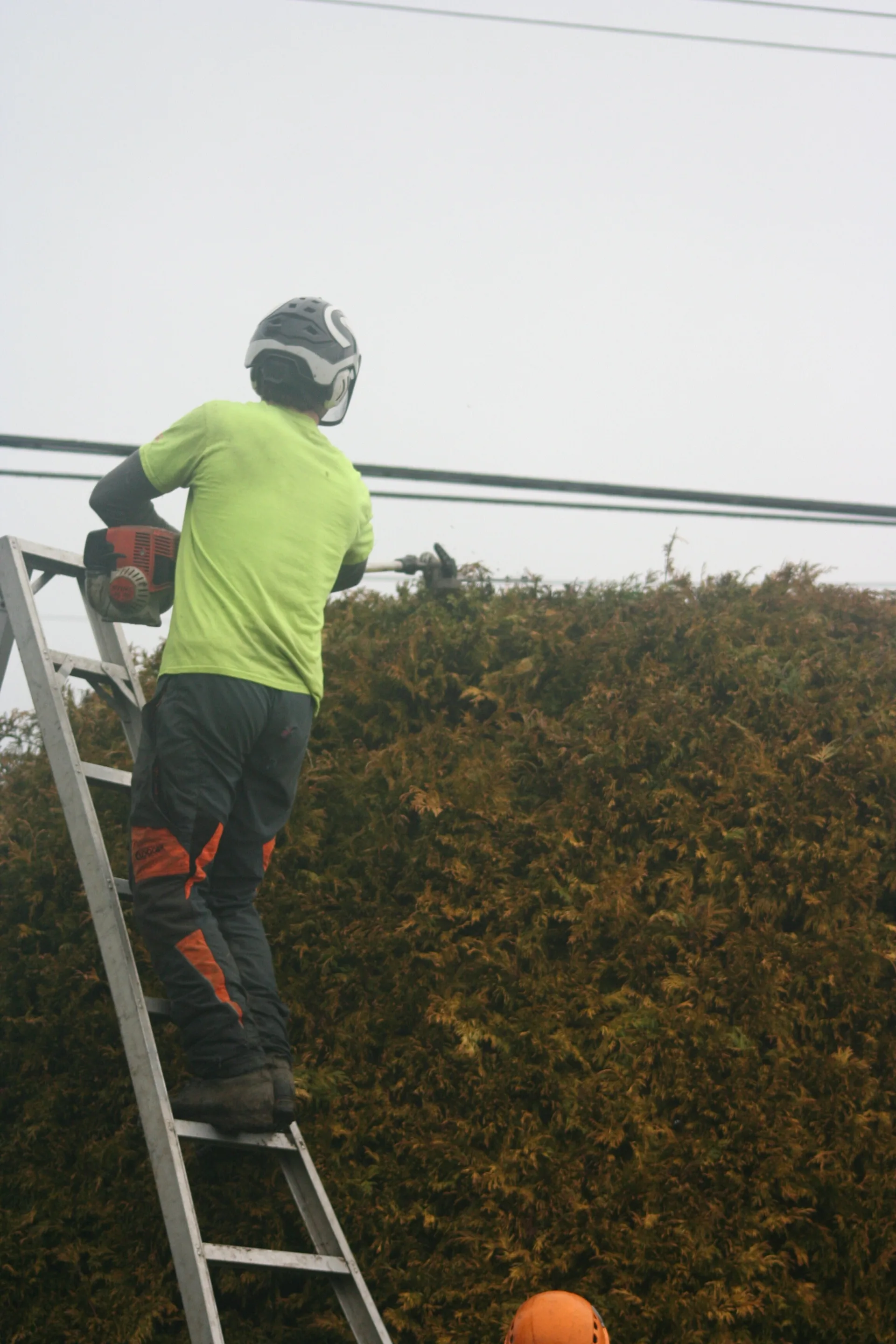
A well-kept hedge frames a garden and makes outdoor space easier to enjoy. Dogwood trims and shapes hedges, assesses overgrown growth and helps you choose a practical balance between light, height and privacy.
Hedge trimming is quoted for hedge length, height, species, access to each face and the desired finish. A routine trim and a major reduction require different assessments.
Keep the privacy. Improve the shape.
Before trimming, decide which side matters most, what height you want to maintain and how much privacy you need. We look at the hedge’s condition and discuss a finish that works for entrances, neighbouring gardens and the overall landscape.
Overgrown hedges need an assessment
A tall hedge cannot always be cut to any height in one visit. The species and amount of healthy growth influence how far it can be reduced and whether a staged approach is sensible. Photographs of the full hedge and both ends help us plan.
Access and cleanup matter
Please share the length, approximate height, slope and working space on each side. Fences, outbuildings and narrow garden paths affect access. We discuss clipping collection and debris handling so the tidy result includes the ground as well as the hedge.
Cedar hedge trimming without losing the privacy screen
A cedar hedge can be a useful boundary, but the height you want must be considered alongside the live growth available. Photograph the entire hedge, including its base and both ends. Discuss the finished height, access to the outer face and whether neighbouring permission is needed. Shape and growing condition matter as much as a straight top line.
Routine hedge cutting versus overgrown hedge reduction
Maintenance trimming manages recent growth; reduction changes the hedge’s size more substantially. Cutting into areas without living growth can leave a poor result, especially for species that do not readily regenerate there. A staged approach or replacement planting may be worth considering for a severely overgrown screen. The quote should specify the surfaces being trimmed and the handling of clippings.
Maintenance trimming and hedge reduction do different work
The outline you want must be matched to the growth the hedge can retain. A dense hedge with recent extension growth differs from one with bare interior wood. Plan the top, both faces and the lower edge separately, especially where a screen is shared with a neighbour.
Your concern
An approach to discuss
What matters
A regular privacy screen
Maintenance trimming to an agreed outline.
Specify the height and faces included, plus the privacy needed at windows or seating areas.
A tall, overgrown hedge
Species-based reduction assessment.
The target height may expose old wood; a staged change or replacement discussion can be more useful than an extreme cut.
A gap or declining section
Health and growing-space review.
Uniform trimming will not necessarily repair poor root conditions, missing foliage or a damaged plant.
Make the hedge manageable after the visit
Ask how future extension growth will affect the agreed height and access. Photos taken before the next trim help distinguish seasonal growth from a section that is genuinely declining. For a multi-plant screen, note whether the weak area is one plant or a pattern across the whole hedge.
Clippings can collect inside the hedge as well as on the ground. Agree on collection, material removal and access to neighbouring faces in advance. If replacement plants are being considered, include root space, mature size and watering arrangements; the new screen should not recreate the same maintenance problem.
Prepare a useful enquiry
Length, approximate height and access to each face.
The desired top line and the privacy you need to retain.
Photos of bare patches, fences and any awkward working route.
Plan hedge trimming & reduction for your community
Property conditions and current requirements differ across the region. Explore local planning for Victoria, Saanich, Langford, Colwood and other service areas, then provide the exact address for assessment arrangements.
Our tree-service pricing page explains the cost factors and inclusions to discuss. Before removal, major pruning or property changes around retained trees, check the local tree-permit guide and relevant authority.
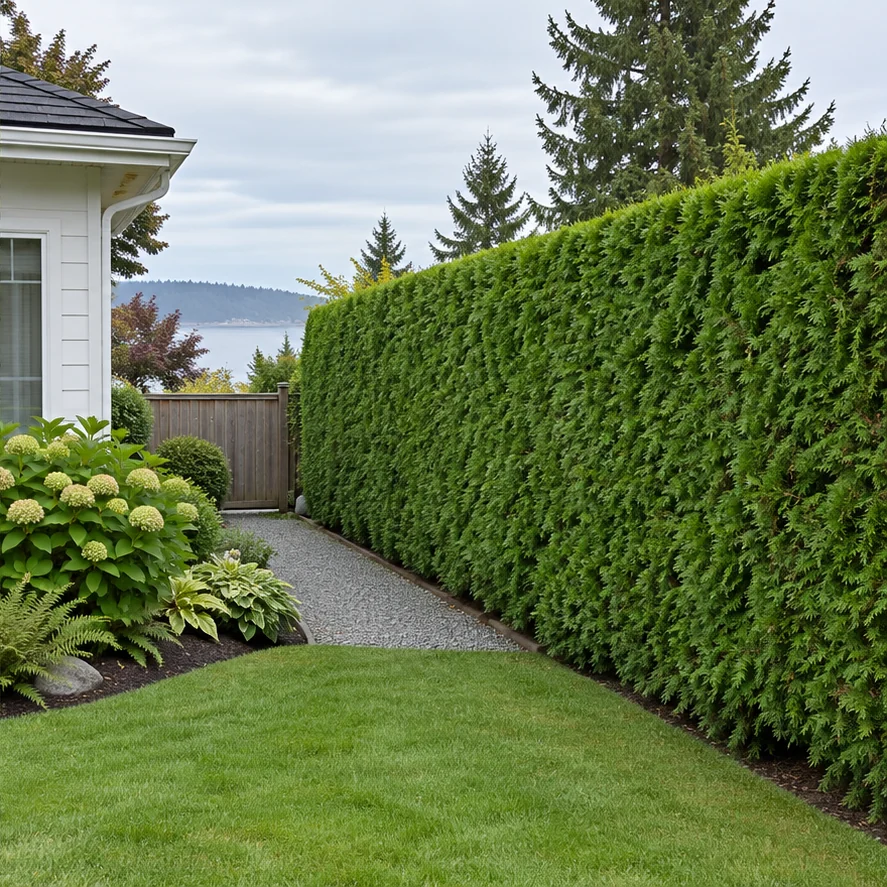
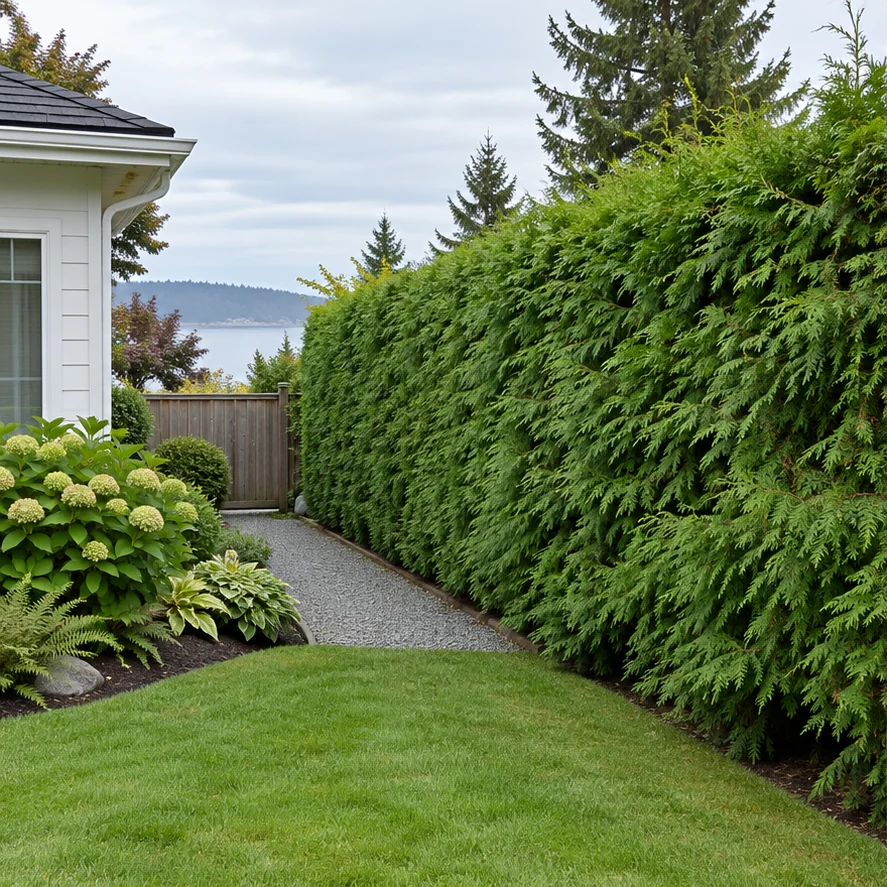
Before and after comparison
Hedge Trimming & Reduction in Victoria, BC.
Explore a visual example of the outcome before defining your own scope.
BeforeAfter
Hedge Trimming in Victoria, BC
A defined hedge outline with a living privacy screen retained.
Drag, tap or use the arrow keys to compare.
The result and the scope belong together
Appropriate pruning improves the agreed form or clearance while retaining suitable living growth. This visual example explains a possible outcome, rather than a completed Dogwood project. Your own plant follows its species, condition and assessed scope.
Hedge Trimming & Reduction in Victoria: detailed answers.
Understand your options before you book.
Can you trim tall cedar hedges?+
Send photos, approximate dimensions and access details. We assess the species, growth and available work space before confirming a suitable trimming or reduction plan.
Will a hedge grow back after a heavy reduction?+
Regrowth depends on the species and the wood left behind. Some hedges do not recover well when cut into old bare growth. We assess the hedge before recommending the amount of reduction.
How is the cost of hedge trimming calculated?+
Length and height help estimate the scope, but they do not describe all the work. Access on both sides, steps, slopes, the amount of regrowth and clipping collection can change the time involved. Send full-length photos and approximate dimensions. Agree on which faces and top are included before comparing prices.
Can only my side of a shared hedge be trimmed?+
A one-sided scope can be discussed, but the hedge’s ownership, access and final appearance still matter. Clarify the boundary and obtain any necessary permission before arranging work from another property. Tell us if the top or opposite face is excluded so the quote and intended finish are clear.
How often should I arrange cedar hedge maintenance?+
The interval depends on growth, the desired outline and how much recent growth can be managed at each visit. A regularly maintained screen has a different workload from one left for several seasons. After assessing the hedge, discuss an interval that preserves its form and suits the garden.
Can a hedge be lowered while keeping screening at eye level?+
Possibly, depending on species, live growth and the amount of height reduction requested. Identify the privacy you want to preserve, not just the height you want removed. The assessment can compare a modest reduction, staged work and other options where the desired cut would leave bare wood.
Do overgrown hedges always need to be removed and replanted?+
No. Some can be brought back into a manageable form, while others have insufficient live growth for the intended reduction. The species and condition guide the decision. If replacement is the better option, discuss removal, stump or root work, plant selection and watering as separate parts of the plan.
What if wildlife is using the hedge when trimming is planned?+
Tell the team about nests or wildlife activity before work begins. The work area and timing may need to change, and applicable wildlife requirements must be respected. Do not disturb a nest to prepare for an appointment. A routine garden-maintenance schedule should allow for a site check rather than assume every date is suitable.