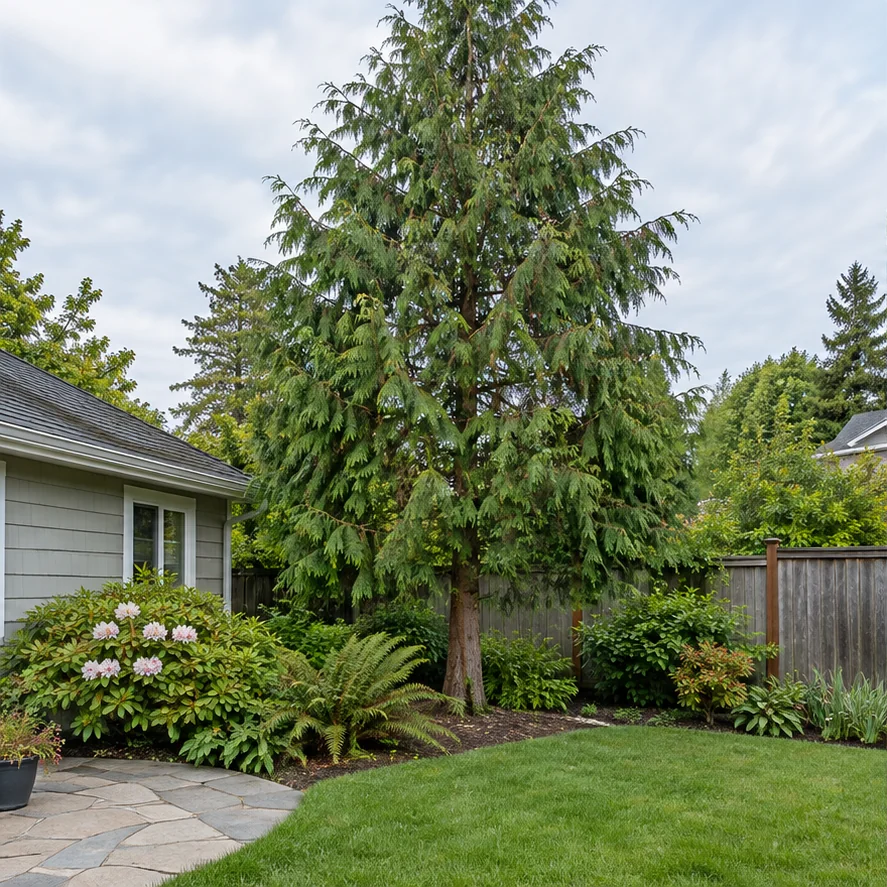
Tree removal should start with the reason for removal, the condition of the tree and what surrounds it. Dogwood Tree Care LTD plans removals around your home, garden, neighbouring property and the access available, with the work and cleanup agreed before the job.
Tree removal in Victoria is planned around tree condition, nearby buildings, working space and municipal requirements. The quote should identify the tree, removal method, timber handling and whether stump work is included.
The right decision for the tree and the property
A tree close to a house does not automatically need to come down. We look at the concern, discuss whether pruning is a sensible alternative and explain the removal option when retention is unsuitable. Dead, declining and structurally compromised trees need a site-specific approach.
Controlled work in established gardens
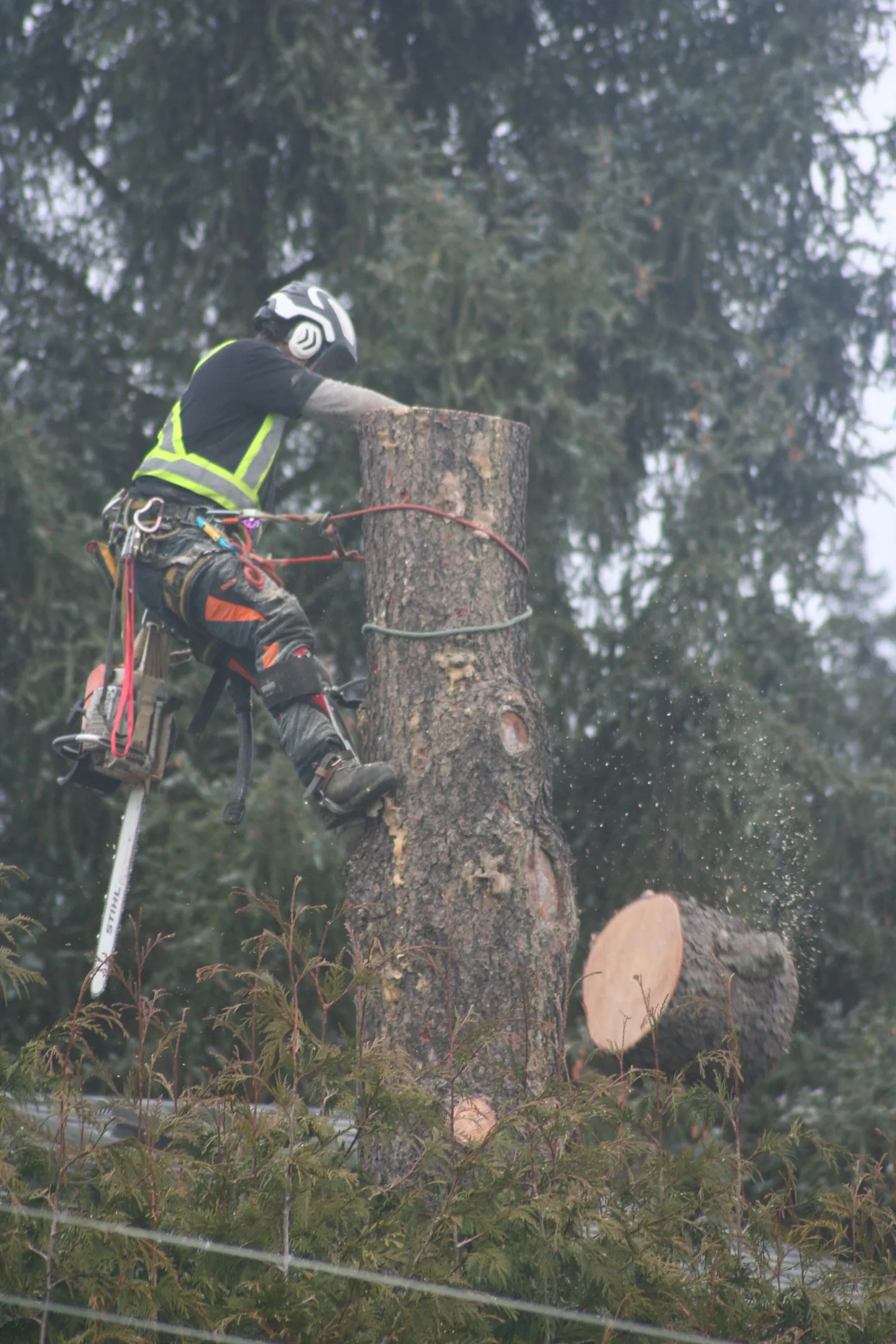
Buildings, fences, gardens and narrow access can change how a tree is dismantled. The assessment considers the working area, climbing and rigging requirements, branch and timber handling, and the protection of surfaces below. Tell us about gates, stairs, driveways and neighbouring access.
Permits, timber and cleanup
Confirm the relevant municipal tree rules before work starts. Your quote should also make clear whether timber stays, branches are removed or chipped, and stump work is included. Tree removal and stump removal are separate tasks; both can be discussed in the same assessment.
Large tree removal, tree cutting and sectional dismantling
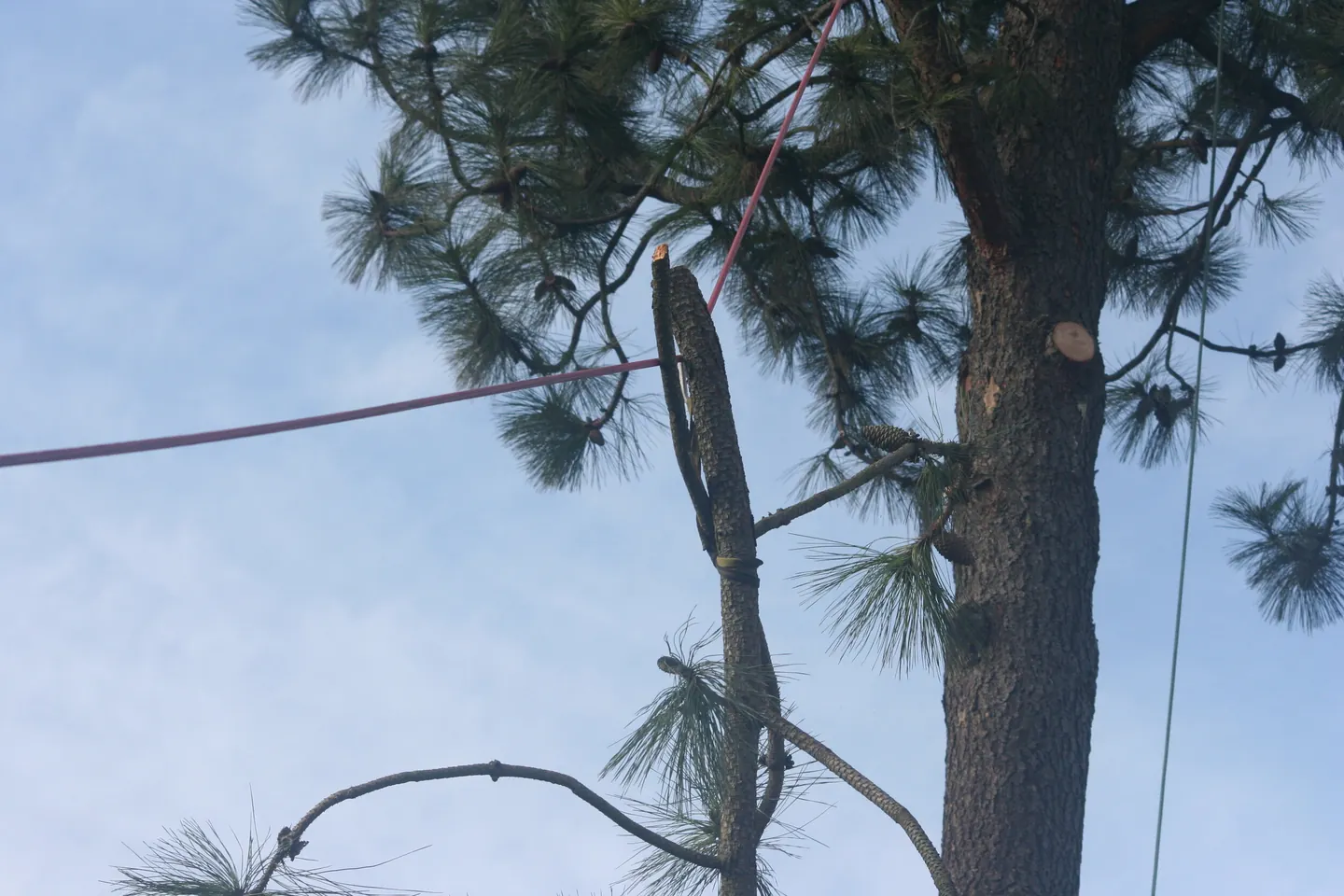
“Tree cutting”, “tree falling” and “tree felling” can describe very different jobs. A tree in an open working area may allow a different approach from a broad canopy above a house. On a restricted site, individual branches and trunk sections may need controlled handling. The assessment establishes whether the condition supports climbing, where material can go and what equipment is appropriate. Photographs help introduce the project, while the final method follows the site assessment.
Choose a finish that suits the next use of the garden
If the tree is making room for a new bed, lawn or replacement planting, describe that goal at the quote stage. A cut stump, a ground stump and an excavated root ball leave different conditions. Discuss remaining wood, access for later trades and the ground finish separately. For a tree you may be able to retain, compare the removal option with suitable pruning before committing to a permanent change.
How a Victoria tree-removal method is chosen
Height is only one part of a removal assessment. The usable space below the tree, its remaining strength and the route for moving material can matter just as much. Explain the concern first, then ask how the proposed method addresses the tree and the occupied space around it.
Your concern
An approach to discuss
What matters
Open working space
A ground-based removal may be considered.
The complete landing area and neighbouring property still need assessment; an open-looking garden is not enough to choose a method.
Canopy over a home or fence
Sectional dismantling and controlled handling may be appropriate.
Branch size, suitable anchors and space for the crew determine how sections are managed.
Dead or compromised tree
A method suited to the remaining structure is required.
Do not assume a deteriorated tree can be climbed or handled in the same way as a sound tree.
Agree on the garden you want left behind
Decide whether usable timber will stay, be cut into agreed lengths or leave the property. Branch chipping, hauling and access cleanup belong in the written scope. If wood remains, identify a practical placement area before the work starts; a request for firewood does not automatically include splitting or stacking.
The cut stump is a separate decision. For lawn, a replacement planting or a future building project, describe the intended ground use before stump treatment is selected. Removal, grinding, excavation, soil replacement and final landscaping can involve different providers and separate costs.
Prepare a useful enquiry
A wide photograph of the full tree and structures below it.
The route from the street, including gates, steps and shared access.
Any permit conditions and your preference for branches, timber and stump work.
Property conditions and current requirements differ across the region. Explore local planning for Victoria, Saanich, Langford, Colwood and other service areas, then provide the exact address for assessment arrangements.
Our tree-service pricing page explains the cost factors and inclusions to discuss. Before removal, major pruning or property changes around retained trees, check the local tree-permit guide and relevant authority.
Before and after comparison
Tree Removal in Victoria, BC.
Explore a visual example of the outcome before defining your own scope.
BeforeAfter
Tree Removal in Victoria, BC
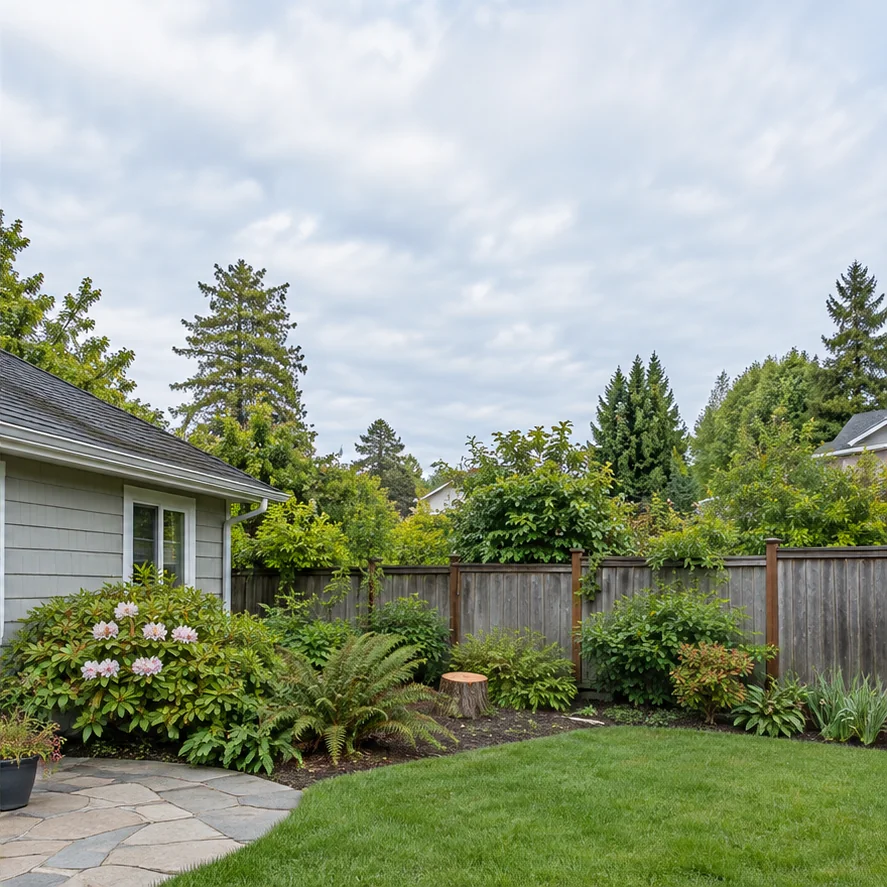
Standing-tree removal and a clear garden space, with stump treatment as a separate stage.
Drag, tap or use the arrow keys to compare.
The result and the scope belong together
The removal example leaves a cut stump, showing why standing-tree work and stump treatment should be specified separately. The actual method and finish follow the assessed tree, surroundings and permissions.
Yes, the existing business handles removals using climbing and rigging techniques. An assessment determines a suitable method for the individual tree, structures and access. Share photos and distances when you request a quote.
Is stump grinding included in tree removal?+
Not automatically. Ask for stump work to be considered in the quote. Access, machinery, underground services and the intended use of the space affect what can be included.
What changes the price of a large tree removal in Victoria?+
The amount of wood is only part of the price. A tree over a roof, a weakened trunk, restricted access or a long carry to the truck can change the method and labour. Permits, stump work and the agreed cleanup also matter. Request a scope for your actual property rather than a price based on height alone.
Can a dead tree be removed using the same method as a healthy tree?+
Not necessarily. Dead or decayed wood can affect the strength of branches and anchor points. The crew must assess whether the tree can support the proposed climbing or rigging method and whether another approach is needed. Tell us about visible damage and when the tree declined; avoid testing branches yourself.
What happens to the trunk and branches after the tree comes down?+
That depends on the agreed quote. Branches may be removed or processed, while trunk wood may be hauled or retained in a specified form. Ask about cutting lengths, where retained wood will be placed and the final cleanup. Firewood splitting, seasoning and later landscaping are separate tasks unless expressly included.
Should I remove a tree simply because it is close to my roof?+
Proximity alone does not answer the question. The assessment considers condition, structure, the actual clearance problem and whether selective pruning would meet the goal. Removal may be appropriate in some cases, but keeping a useful tree can remain an option. Send a wide photo showing the tree and building together.
What should be ready before a tree-felling appointment?+
Confirm the agreed tree, any required permissions, access arrangements and the material-handling plan. Discuss moving vehicles, garden furniture and other items from the work area. If neighbouring access is needed, arrange it before the visit. The crew will confirm the work area and any site-specific preparation rather than asking you to do tree work.
Can I request removal and replacement planting in one enquiry?+
Yes. Explain why the existing tree is being removed and what you want to plant afterwards. Removal, stump treatment, site preparation and planting need distinct scope items. A replacement required by a permit may have species, size or location conditions. Those conditions should be reviewed before a new tree is selected.