A clear starting point
Provide the exact address, identify each tree or hedge, show the full access route and explain the desired finish. Share permissions, known services and any property-management requirements. Confirm the work arrangement before moving items or preparing access for a crew.
Show the tree in its surroundings
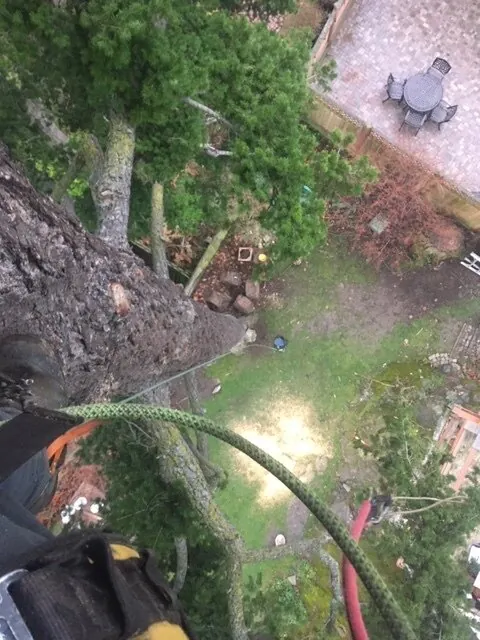
Take a wide view that includes the whole canopy and the structures or garden below. Add a second angle if one view hides the concern. A close photograph of a branch can support the enquiry, but it should not replace the overall setting.
Label multiple trees consistently: a sketch or numbered photographs can be enough. For a hedge, show both ends and the sides to be trimmed. For stumps, include approximate size and the planned use of the ground. Photograph damaged material only from a safe place.
Describe the whole route from the street
Include gates, narrow turns, steps, slopes and the available working area. Note shared driveways, parking constraints and access that depends on a neighbour or property manager. A route suitable for an assessor on foot may not suit the equipment needed for the work.
Known buried services, overhead electrical lines and surfaces to protect belong in the discussion. Do not arrange an equipment route across retained roots or soft ground without review. The suitable access method follows the actual site and scope.
Keep permissions and communication ready
Provide current authority instructions and relevant permits or plans. If another owner, strata or manager must approve the scope, identify that decision-maker. Tree work should not be scheduled on the assumption that a free estimate establishes permission.
Ask what resident or neighbour communication the work requires and who handles it. Access permissions and shared boundaries need clear arrangements. A simple enquiry can start the planning while those details are confirmed.
Agree on the workday and handover
Once the scope and visit are confirmed, discuss pets, vehicles, outdoor furniture and the areas that need to remain clear. Do not enter the work zone to inspect progress. Any changed objective should be discussed through the agreed contact rather than by directing different crew members independently.
Review the completed work against the quoted tasks and material plan. Keep any aftercare or follow-up instructions for retained trees and new planting. Later ground work, formal documents and recurring maintenance remain separate commitments unless included.
Useful preparation for different enquiries
| Task | Photographs or details | Finish to discuss |
|---|
| Removal or pruning | Full crown, nearby structures and the approach. | Retained canopy, branches, timber and access cleanup. |
|---|
| Hedge or ornamental work | Both ends, working faces and the preferred shape. | Privacy, clipping collection and future maintenance. |
|---|
| Stump or planting stage | Size, gate width, known services and usable soil space. | Treatment depth, material removal and aftercare. |
|---|
Further information for tree owners
These resources support the planning questions in this guide. Local requirements and the suitable work are confirmed for your address, tree and project.