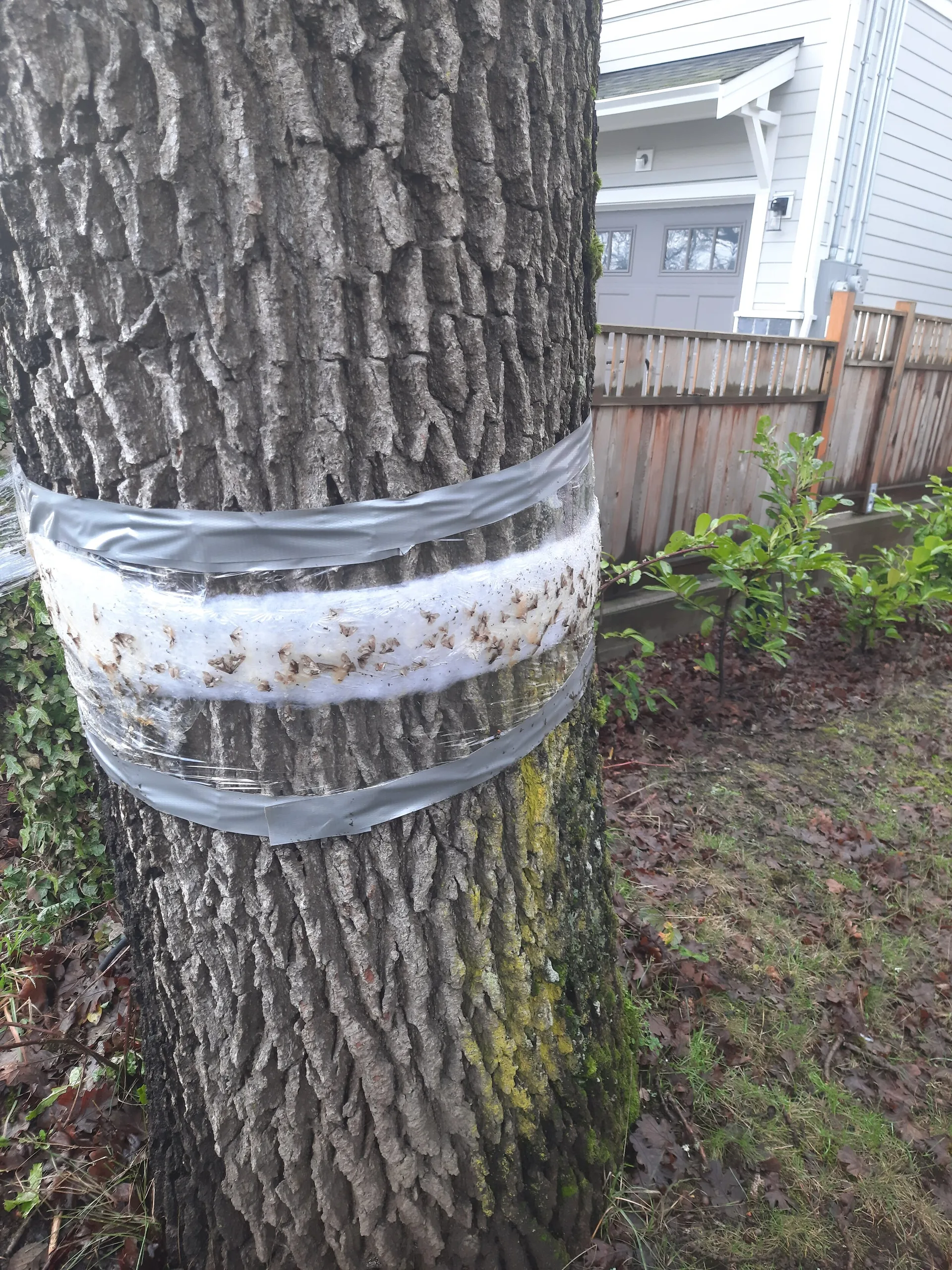
A clear starting point
Record new leaf loss, dieback or structural changes from a safe position and describe the tree’s surroundings. Keep away from damaged or suspended material. Call to confirm assessment availability, and contact BC Hydro when trees or branches involve electrical lines.
Describe the pattern, not only the word “sick”
Is the change across the whole tree or confined to one limb? Did it appear gradually, after a dry period or following work nearby? Dated photos from the same position can make that history clearer. Include the full crown as well as the part that first caught your attention.
Leaf colour, thin foliage and bark appearance can have different explanations. Do not select a pesticide, fertilizer or heavy pruning treatment solely from an online image match. A health enquiry should establish the needed investigation before a management option is chosen.
Site history can explain what a photograph cannot
Tell the assessor about trenching, soil added around the tree, new paving, changed irrigation or construction traffic. Those details can be relevant even when the visible concern is high in the canopy. Record when each change happened.
For a newly planted tree, share the installation date, watering arrangements and any support system. Establishment questions differ from the care of an old tree in an unchanged garden. Prior reports and treatments are useful context, particularly if several providers have advised on the same tree.
Structural changes need their own assessment
A hanging limb, new crack, changed lean or disturbed ground near the roots is different from routine shaping. Keep the affected space clear and describe nearby paths, buildings and occupied areas. Do not move closer to obtain a better picture of damaged material.
A formal tree-risk assessment has a particular scope and qualified provider. It should not be confused with a general health conversation or a service quote. Explain the decision you need, including any municipality, insurer or property-management request.
Electrical concerns belong with the utility
BC Hydro directs people to avoid pruning near power lines and to contact the utility about vegetation affecting its lines. Tell the team if a tree or branch involves an electrical line. Routine residential tree work should not be assumed to provide utility clearance.
For an immediate threat to life, contact emergency services. For the tree-care enquiry, phone to check availability and state what is blocked or damaged. A saved online request does not establish dispatch, arrival time or a round-the-clock response commitment.