Rooted in Victoria. Serving Southern Vancouver Island.eagleseyetreecare@gmail.com

Victoria tree-care planning

Crown reduction, tree trimming and topping: know the difference.

The phrase “make it smaller” leaves the most important decisions unresolved. Different cuts affect the tree differently. Define the height, spread, weight or clearance concern so the recommendation can address it deliberately.

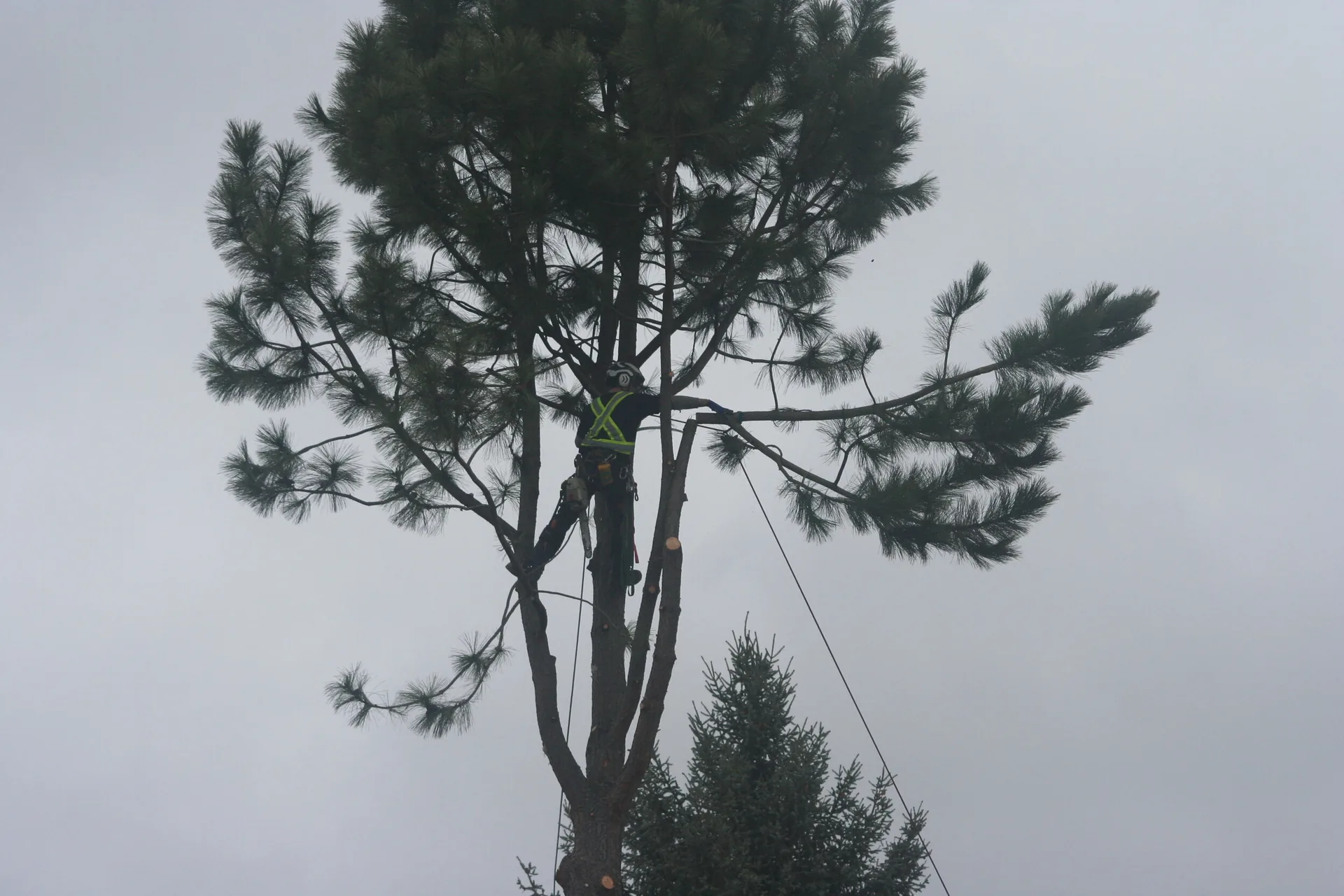
Arborist working among the branches of a mature tree.

A clear starting point

Crown reduction uses suitable retained branches to reduce selected parts of a canopy. Topping cuts branches back indiscriminately to stubs or unsuitable laterals. A specified reduction and topping are not interchangeable ways to shorten a tree.

Ask which part of the canopy needs to change

A limb above a roof may need a focused clearance discussion rather than a uniform reduction of the whole tree. Show the interference and the surrounding canopy. Explain the shade, privacy and natural form you want retained so the scope addresses both the problem and the valued features.

A proposed reduction should identify the objective and realistic extent. Suitable cut locations may limit the achievable change. A height target alone does not establish that the remaining branches can sustain an appropriate form.

Why a topped appearance is not a useful specification

Topping can leave large stubs and encourage a difficult regrowth pattern. ISA guidance advises against it. A tree that has already been topped needs assessment of its current condition and growth rather than another automatic repeat of the same cuts.

Ask for the chosen work to be described in terms of the branches and objective. A quote for “cutting back” without that detail can be hard to compare. Different providers may otherwise be pricing fundamentally different outcomes.

Thinning, raising and reduction address different concerns

Thinning concerns selected branch density; raising concerns clearance below the crown; reduction changes specified height or spread. Those descriptions do not establish which work your tree needs. The tree’s structure and condition still guide the recommendation.

Combining methods should have a reason. Removing extra branches solely because the crew is already on site can change the original objective and the canopy retained. Agree on the intended finish before starting and discuss any proposed scope change explicitly.

Consider the next maintenance decision

Trees continue growing after pruning. Ask how the work may affect later shoots or branch extension and when review would be useful. A responsible plan does not promise permanent clearance from one visit.

Where a species repeatedly conflicts with the available space, compare suitable ongoing care with other permitted options. A different planting may eventually be more practical, but that decision follows assessment and current local requirements. Reduction should not be used to avoid considering the long-term fit of the tree.
Three common requests, three different discussions

RequestScope to clarifyWhat not to assume
More clearanceThe exact roof, driveway or path conflict.That the entire tree needs its height reduced.
Less branch weight or spreadThe selected limbs and suitable retained growth.That every branch can be shortened by an equal amount.
A much shorter treeThe condition, achievable reduction and longer-term options.That topping provides a responsible substitute for a defined plan.

Clear advice, from the start

More answers: crown reduction vs tree topping victoria bc.

Understand your options before you book.

How can I describe a reduction request without asking for topping?

Identify the branch, height or spread concern and the clearance needed. Ask which reduction is suitable while retaining appropriate structure. The specification should explain the objective and any limits, rather than instruct that all branches be cut to one arbitrary line.

Is canopy thinning the same as reducing tree height?

No. They address different aspects of the crown. Thinning selected growth does not necessarily shorten the tree, while reduction focuses on specified dimensions or limbs. The assessment determines which approach, if any, suits the actual concern.

Can an already topped tree be assessed for a different approach?

Yes. Share the history and photos of its current growth. Restoration, staged pruning, monitoring or other options may need comparison after assessment. The appropriate outcome depends on condition and structure; it cannot be promised from a before photograph alone.

Why might a requested height reduction be limited?

Suitable retained branches, tree condition and the amount of live canopy matter. A numerical target can require inappropriate cuts if it ignores those factors. Ask what change is responsibly achievable and whether an alternative objective would better solve the original problem.

Should a pruning quote identify the shade I want retained?

It helps to do so. State the garden or window where shade or screening matters, together with the clearance concern. That allows the discussion to account for valued canopy rather than assume a more open appearance is always the preferred result.

Does responsible reduction eliminate future maintenance?

No. Subsequent growth and changing condition still need consideration. A useful plan discusses how the original concern may return and when the tree should be reviewed. Avoid treating any pruning method as a permanent guarantee of size or safety.

Tell us about your property

Good tree care starts
with a conversation.

Share your tree or hedge concern, your address and the result you want. We’ll discuss the suitable work and prepare a free, no obligation quote.

Call Today for a Free Quote778-678-7771eagleseyetreecare@gmail.com
  • Complimentary initial advice
  • A property-specific plan
  • A clear scope before work begins

For an urgent tree concern, call to check availability. For a direct inbox enquiry, email your address, photos and the work you need.

No obligation. Just a clear next step.

Request Your Free Quote

No obligation. We use your details to respond to this quote. Privacy Policy.

Call 778-678-7771 for a Free Quote